
The Italian bakery sector is undergoing a phase of significant transformation, driven by changing consumer habits and an increasingly diversified product offering. Today, pizzas, focaccia and sweet baked goods account for 60% of bakery revenues, while bread—although still representing 62.5% of production volumes—generates 40% of turnover.
These findings emerged during the talk “The consumer has changed. And the baker?”, held at SIGEP World, currently taking place at the Rimini Expo Centre until 20 January, through a preview of the Cerved research analysing the evolution of the baking industry.
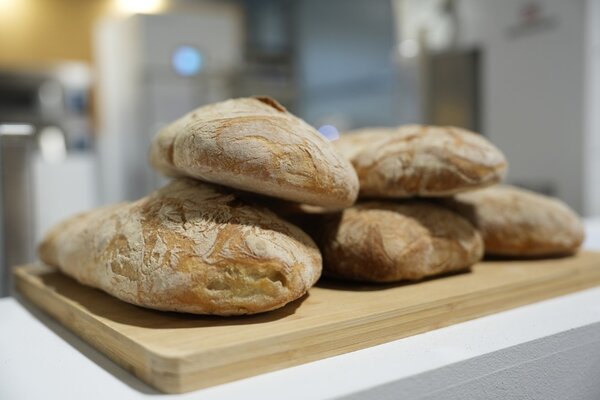
Bread declines in value, while complementary products grow
According to the analysis, bread remains central in terms of volume, but its share of revenue has decreased from 44% in 2023 to 40%, a decline offset by the growth of pizzas, focaccia and pastries, which recorded a +3.3% increase compared to two years ago.
This trend highlights how bakeries are evolving towards more hybrid business models, able to capture new consumption occasions and meet demand for greater variety.
Grocery retail and foodservice: market dynamics
Within the broader food consumption landscape, grocery retail continues to strengthen, with turnover up +2.8% in 2025 compared to the previous year, reaching €130 billion. Foodservice also shows positive growth (+3.0%), although it is affected by stronger price pressure, approaching €100 billion in total value.
In terms of bread consumption, the artisan segment recorded a limited decline (-1.9% between 2023 and 2025), confirming the resilience of high-quality, craft-based products.
Bakery networks: fewer outlets, stronger organisation
On the production side, the number of bakeries in Italy fell to 18,201 outlets in 2025 (-1.6%), signalling a market in transformation rather than contraction. Structural changes are particularly evident: 7% of bakeries now operate more than two outlets, with Lombardy and Tuscany leading the way in organised and chain-based models.
This evolution reflects the need for greater efficiency, managerial skills and adaptation to new market dynamics.
Innovation and new skills shape the baker of today
During the debate, Alberto Molinari, President of AIBI, and Palmino Poli, President of ASSITOL, highlighted the need to accompany these changes with organisational and technological innovation, while safeguarding the identity and value of the supply chain.
Maria Maltese, curator of the Cerved research, emphasised how technology, new formats and skills are reshaping the role of the baker, increasingly focused on sustainability, product diversification and direct relationships with consumers.
A transformation that confirms bakeries as evolving artisanal businesses, capable of innovating while preserving their roots.
Other related news

Bean to Bar chocolate: from cocoa Bean to Bar, artisan chocolate gains momentum in Italy
SIGEP WORLD celebrates the recognition of Italian Cuisine as a UNESCO Heritage
SIGEP World celebrates the 10 Italian pastry chefs competing in the Panettone World Cup
Luxury Hotel Food Experience: food as a new driver of luxury hospitality
European restaurant market: Italy and Spain hold steady, digital orders surge
17/01/2026
Lorenzo Cagnoni Award: excellence in foodservice innovation celebrated at SIGEP WORLD
Magnetic refrigeration is transforming beverage cooling: efficiency estimated above 50%
SIGEP Vision Talk: out-of-home visits remain strong in Italy and Spain, China on the rise
Gelato Festival World Masters: Salvatore Ravese is the Best Italian Gelato Maker 2026