
In recent years, packaging in foodservice has moved beyond being a technical concern limited to logistics or sustainability. It has become something far more significant: a direct touchpoint between product, brand, and end consumer. In many cases—especially in off-premise consumption—it is the only one.
This shift is structural and irreversible. It is not just about materials or environmental regulations, but about the very way food is designed, sold, and consumed. Packaging is no longer what protects the product—it is what determines its perceived quality at the moment of actual consumption.
From “containing” to “defining the experience”
Market growth clearly reflects this transformation. In 2024, the global food packaging market reached a value of $458.6 billion, with steady growth expected in the coming years.
Source: https://www.gminsights.com/industry-analysis/food-packaging-market
This expansion is driven by a profound shift in consumer behavior: more and more people are looking for fast, ready-to-eat, and portable solutions. Demand for ready-to-eat and convenience food is now one of the main drivers of the sector.
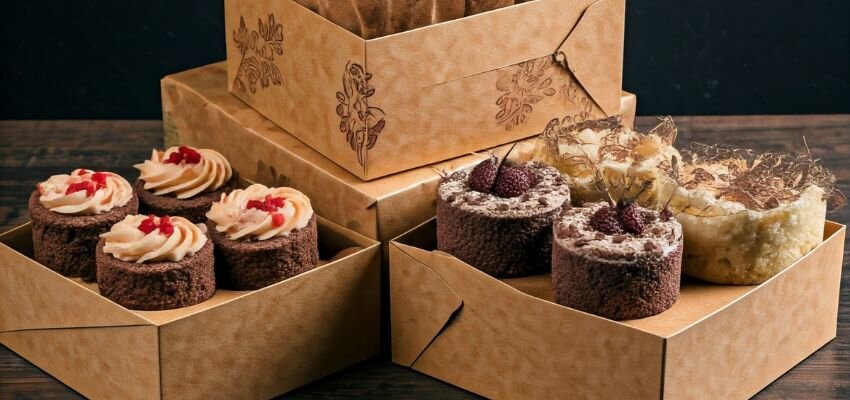
Delivery and off-premise: the real battleground
The boom in delivery has not only increased volumes—it has reshaped the rules of the game. Packaging growth today is directly fueled by the expansion of online grocery, meal kits, and food delivery.
Source: https://www.grandviewresearch.com/industry-analysis/food-packaging-market
This means that packaging is increasingly the only element that guarantees:
- temperature
- texture
- visual integrity
- ease of consumption
A dish not designed for delivery risks losing value before it is even consumed. Packaging therefore becomes an extension of the kitchen.
Packaging and profitability: the less visible side
There is a less obvious but highly strategic aspect: packaging directly impacts profitability.
It reduces waste, improves shelf life, and limits returns. But above all, it enhances perceived value. In a context where pricing is under pressure, packaging becomes a tool to support premium positioning without altering the product itself.
The overall growth of the packaging sector—expected to rise significantly in the coming years—is largely driven by takeaway and delivery.
Source: https://www.technavio.com/report/packaging-market-industry-analysis
The experience goes through the container
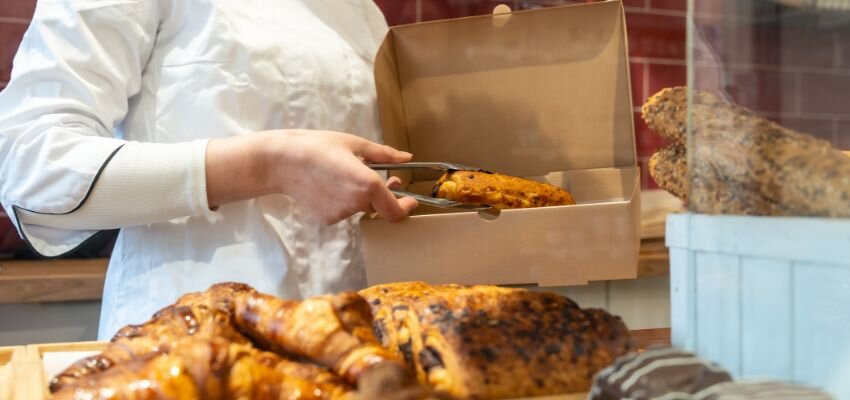
In contemporary foodservice—especially in bakery, pastry, and gelato—packaging has become an integral part of the experience.
It is no longer just about aesthetics, but functionality:
- preserving crispness
- preventing condensation
- maintaining temperature and structure
A mistake at this stage compromises the entire product. At the same time, packaging communicates. Materials, shape, and design influence the perception of quality and positioning.
Sustainability: from narrative to operational constraint
In recent years, sustainability has been the main driver of innovation. Today, it has become a mandatory condition.
Sustainable packaging reached a market size of nearly $200 billion in 2024.
Source: https://www.towardspackaging.com/insights/food-packaging-market
In Europe, regulations are accelerating this transformation, requiring recyclable materials and greater responsibility across the value chain.
However, a key tension is emerging: sustainability vs. performance. More sustainable materials do not always guarantee the same technical performance, forcing companies to rethink product and packaging design entirely.
A global scenario: Asia accelerates
This phenomenon is not limited to the West. Asia-Pacific now accounts for over one-third of the global food packaging market.
Source: https://www.fortunebusinessinsights.com/industry-reports/food-packaging-market-101941
Here, innovation, urbanization, and digitalization are accelerating the development of new consumption models—and, consequently, new packaging solutions.
Implications for bakery, gelato, and pastry
For the sectors at the core of SIGEP, packaging is an even more critical lever. In gelato, it must manage temperature and transport; in bakery, crispness; in pastry, aesthetics and fragility.
In all these cases, packaging is not an accessory—it is a design component of the product itself.
Conclusion
In out-of-home consumption, packaging is changing its role. It is no longer a cost to optimize, but a strategic lever that impacts quality, margins, and experience.
The key point is simple: consumption no longer happens where the product is created. And in that in-between space, packaging makes the difference.
Today, designing a great product also means designing how it will be delivered, opened, and consumed.
Because in modern foodservice, the container does not protect the product. It defines it.
PUBLICATION
27/04/2026
Other related news

Non-dairy ice cream stabilizers: innovative solutions for perfect texture and stability in frozen desserts

Refill in Cafés: from pilot projects to global strategies

Transparent menus: how to talk about clean labels in the age of UPFs foods

Innovations to improve the sustainability of food

Net Zero Strategies in Foodservice: dairy industry challenges and success stories

Energy-efficient coffee equipment: sustainability meets innovation

How sustainable food packaging is evolving in foodservice: trends, challenges and solutions
Sustainable refrigeration: the future of cooling in foodservice

New frontiers in plant-based milk: from oats to chia and watermelon seeds

21/11/2024
Exploring Sugar Alternatives: Sweetness That’s Good for Business and Health

Sustainable bakery packaging trends: go compostable in 2025