
Deposits, Prepayments and Smart Reservations: How Restaurants, Bakery Cafés and Pastry Shops Can Reduce No-Shows and Protect Revenue Without Compromising the Guest Experience
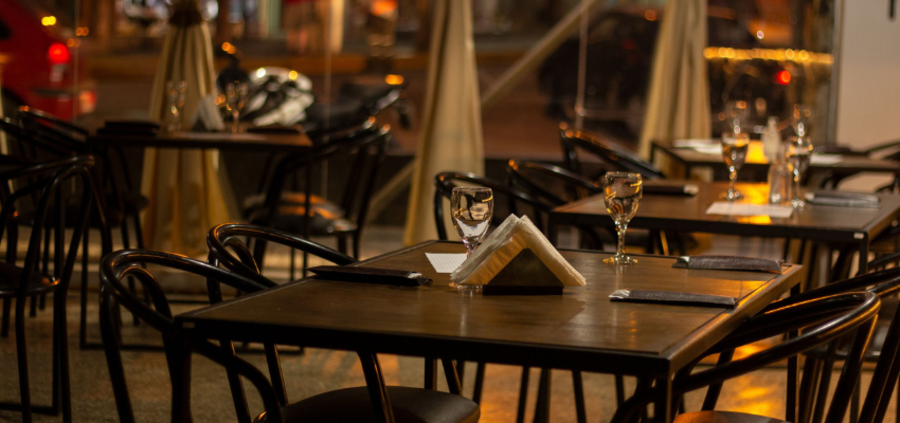
A reserved table that remains empty represents more than just a guest who failed to show up. For a restaurant, brunch café or pastry shop offering table service, it can mean a lost sales opportunity, wasted preparation and service planning that no longer reflects
actual demand.
This is the problem of no-shows: reservations that are neither honoured nor cancelled in advance. The issue is prompting foodservice operators to rethink their reservation policies, introducing automated confirmations, deposits, credit card guarantees and digital systems to reallocate tables.
However, the issue goes beyond cancellation fees. The challenge is how to turn reservation management into a revenue management tool, reducing unused capacity without creating barriers for guests who want to book.
No-Shows and Late Cancellations: The Hidden Cost of a Reservation
Not all missed reservations have the same financial impact.
A no-show occurs when a guest fails to arrive without notifying the venue. A late cancellation, on the other hand, occurs when a reservation is cancelled too close to the scheduled time for the table to be reassigned. Both can result in an empty table that remains unused during service.
The distinction matters because the actual cost depends on whether the reservation can be recovered.
A table for two cancelled several hours in advance can potentially be reassigned through a waiting list. A table for ten that remains empty at the last minute, particularly if special preparations have already been made, can have consequences that are much harder to absorb.
According to SevenRooms, in 2025 only 22% of US venues included in its report charged cancellation fees, with an average fee of $52.
These figures do not represent the Italian market, but they highlight an interesting point: even where technologies for managing deposits and cancellation fees are available, their adoption is not necessarily widespread.
For operators, the first step is therefore to measure the actual impact of no-shows, distinguishing between lost reservations and those successfully recovered.
How Much Can an Empty Table Cost?
The financial impact of a no-show does not automatically equal the average price of a meal. It depends on the number of absent guests, expected spending, the availability of alternative customers and costs already incurred.
Consider, for example, a brunch café with 40 covers booked for a Sunday morning, an average spend of €28 per person and a hypothetical no-show rate of 10%.
If four guests fail to arrive and their seats remain empty, the venue could miss out on €112 in revenue during that service. If the same situation occurred across eight services, the potential unrealised revenue would reach €896.
This is an illustrative simulation, not an industry statistic. Furthermore, lost revenue does not equal net financial loss, which depends on avoided costs, profit margins and the possibility of reallocating seats.
The strategic point is that the cost of a missed reservation varies according to the type of service.
For a venue with high table turnover and an active waiting list, the impact may be limited. For a reservation-only afternoon tea, a pastry tasting or a special menu requiring advance preparation, a no-show can also affect operations and the use of ingredients.
This distinction should guide reservation policies.
Deposits and Credit Card Guarantees: How Much Can They Reduce No-Shows?
One of the most widely used tools to limit missed reservations is an upfront deposit.
Guests pay an amount when making a reservation, which is generally deducted from their final bill when they arrive. The deposit creates a financial commitment and allows the venue to protect at least part of the reservation's value.
According to data published by OpenTable, reservations requiring a deposit record, on average, 57% fewer no-shows and are 72% less likely to result in late cancellations compared with the reservations analysed by the platform.
These findings come from an industry operator rather than an independent study, and cannot automatically be applied to every restaurant.
OpenTable also reports that reservations secured by a credit card can result in up to 16% fewer no-shows compared with reservations at venues without booking policies.
The two systems work differently.
With a credit card guarantee, guests provide their payment details but do not necessarily pay anything when booking. A charge may be applied if they fail to arrive or cancel outside the agreed terms.
With a deposit, part of the payment is collected in advance, under conditions established by the venue.
This distinction matters for the guest experience: a standard reservation for two may not require any advance payment, while a large table on a particularly busy evening may justify a stronger guarantee.
The most effective approach is therefore not to apply the same rule to every reservation, but to tailor booking conditions to the financial risk associated with each service.
From Brunch to Afternoon Tea: Why Reservation Policies Should Vary
For restaurants, bakery cafés and pastry shops, reservation systems should reflect the characteristics of each business format.
A brunch café with a high volume of walk-in customers and rapid table turnover can prioritise automated confirmations and digital waiting lists. If a reservation is cancelled in time, the table can immediately be made available again.
A venue offering afternoon tea by reservation has different requirements. Preparations may need to begin well in advance, and the number of available sittings may be limited. In this case, a deposit deducted from the final bill could make demand more predictable.
For a guided tasting, themed dinner or limited-capacity event, prepayment may also be worth considering.
OpenTable reports that, on its platform, bookings for prepaid experiences are 44% less likely to result in no-shows and 67% less likely to be cancelled late compared with the non-prepaid experiences analysed.
Again, these findings should be interpreted within the context of the platform that published them. They do not mean that prepayment is the best option for every venue.
For a bakery or pastry shop, the key operational question should be: under what circumstances does a missed reservation generate costs that cannot easily be recovered?
These are the situations in which it is worth testing more binding reservation policies.
Automated Reminders Can Be More Valuable Than Cancellation Fees
Preventing no-shows is not simply about imposing financial consequences.
A reservation made weeks in advance may be forgotten or may no longer fit the guest's plans. If the system makes it easy to confirm, modify or cancel a booking, the venue can identify table availability earlier.
SevenRooms recommends using automated communications to remind guests of the date, time and cancellation conditions, including a simple link to modify their reservation.
The goal is not only to reduce no-shows, but to turn a potential no-show into a timely cancellation.
This distinction can be crucial during peak service periods.
A table cancelled at 2 p.m. for a later brunch or dinner service can be made available to other guests. A table that remains blocked until the scheduled arrival time, however, may no longer be resold.
Digital waiting lists complete the process by allowing venues to offer newly available tables to customers who have already expressed interest.
For venues with a regular customer base, a well-designed reservation system can also help avoid unnecessarily strict policies. A guest with a consistent history of honouring reservations does not necessarily present the same level of risk as a group booking for a special event.
Is Overbooking Really a Solution?
Overbooking involves accepting more reservations than the venue's actual capacity, based on the expectation that some guests will not arrive.
It is a familiar approach in the hospitality and transport industries, but it has also been studied in the restaurant sector.
Research by Tony S. M. Tse and Yiu-Tung Poon, published in the Journal of Foodservice Business Research, analysed two years of data from a Hong Kong restaurant to develop a model accounting for cancellations, no-shows, walk-in customers and reservation limits.
The study demonstrates how these factors can be analysed together within a revenue management framework. However, it does not establish that overbooking is a suitable practice for every restaurant.
The risk is clear: if all guests arrive, the venue may be unable to honour its confirmed reservations.
For a fine-dining restaurant, brunch café or pastry shop whose positioning relies on the quality of the guest experience, the consequences can be particularly damaging.
Overbooking therefore requires reliable historical data, realistic arrival forecasts and procedures for managing excess demand. Without these conditions, automated confirmations, selective deposits and waiting lists offer more manageable alternatives.
Reservations and Revenue Management: Which Metrics Should Venues Track?
The real opportunity for the foodservice industry is not simply to introduce cancellation fees, but to use reservation data as a source of operational insight.
A restaurant or bakery café can start by monitoring four key indicators:
-
No-show rate: The percentage of reservations where guests fail to arrive without cancelling in advance.
-
Late cancellation rate: The proportion of reservations cancelled after a deadline established by the venue.
-
Table recovery rate: The percentage of released seats that are successfully reassigned.
-
Revenue per available seat hour: A metric that relates revenue to available seating capacity and service time.
These indicators can help identify the most vulnerable time slots and assess the effectiveness of the policies introduced.
For example, a venue might discover that no-shows are concentrated among large Saturday evening bookings, while cancellations for tables of two are easily recovered.
In this situation, requiring a guarantee for every reservation may be less effective than applying it only to larger groups.
The length of time guests occupy a table is also relevant. A quick breakfast, brunch and afternoon tea all involve different service durations and average spending levels.
The objective is not simply to fill every seat, but to achieve the best possible balance between revenue, operational capacity and the quality of hospitality.
Cancellation Fees Only Work When the Rules Are Clear
A stricter reservation system requires transparency.
Before confirming a reservation, guests should be informed of the applicable conditions: any required deposit, the cancellation deadline, the amount of any penalty and the refund policy.
In Italy, the Unione Nazionale Consumatori (National Consumers Union) distinguishes between standard reservations and agreements in which specific financial conditions have been expressly accepted.
A reservation made without specific agreements does not automatically create an obligation to pay a penalty if the guest fails to arrive. The situation may be different when clearly communicated contractual conditions have been accepted or when agreements relate to a specific menu.
For foodservice businesses, introducing deposits and cancellation fees should therefore go hand in hand with transparent terms and verification of compliance with applicable regulations.
Technology makes it possible to automate charges, but the technical ability to apply a penalty does not, in itself, establish the legal right to charge it.
The Real Goal Is Not to Penalise Guests, but to Recover the Table
A guest who fails to arrive can create a financial problem. However, building a strategy entirely around cancellation fees risks overlooking the most important objective: preventing seats from going unused.
A deposit can reduce no-shows. A reminder can encourage timely cancellations. A waiting list can help recover a reservation. An analytics system can identify where to apply these solutions without creating unnecessary friction.
For restaurants, pastry shops and bakery cafés, the future of reservation management may therefore depend less on stricter rules and more on applying them precisely.
The strategic question is not simply how much to charge guests who fail to show up.
It is how to turn every reservation into a more reliable indicator of demand, protecting revenue while maintaining a positive guest experience.
Sources and Further Reading
- OpenTable — 3 Proven Payment Strategies That Help Reduce No-Shows and Cancellations. Platform-reported data on the effectiveness of credit card guarantees, deposits and prepayments, including the figures of 57%, 72%, 44% and 67%.https://www.opentable.com/restaurant-solutions/resources/3-proven-payment-strategies-reduce-no-shows/
- SevenRooms — Katelyn Andrews, How to Reduce Restaurant No-Shows Without Losing Good Guests, 27 September 2026. Data on cancellation fees at US venues and recommendations on selective deposits, confirmations and automated communications.https://sevenrooms.com/blog/reduce-restaurant-no-shows/
- SevenRooms — Should Your Restaurant Require Reservation Deposits? An overview of the role of deposits in protecting revenue and managing reservations.https://sevenrooms.com/blog/restaurant-reservation-deposits/
- Journal of Foodservice Business Research — Tony S. M. Tse and Yiu-Tung Poon, Modeling No-Shows, Cancellations, Overbooking, and Walk-Ins in Restaurant Revenue Management. Published online on 29 June 2016, volume 20, issue 2, 2017, pp. 127–145. A study examining the use of historical data to assess no-shows, cancellations and reservation limits.https://doi.org/10.1080/15378020.2016.1198626
- Unione Nazionale Consumatori — Se disdico una prenotazione al ristorante devo comunque pagare?, 26 July 2022. An overview of the financial conditions associated with restaurant reservations and potential cancellation fees under Italian consumer protection rules.https://www.consumatori.it/news/disdico-prenotazione-ristorante-pagare/
PUBLICATION
19/10/2026
Other related news

The future of coffee: trends and innovations for industry operators

SIGEP WORLD brings artisan gelato to the world

05/05/2026
Golden milk: from Ayurvedic remedy to a $1.6 billion global beverage trend

How grocery stores are reshaping Foodservice

Why partnerships between established companies and startups are on the rise?

Tik Tok and the taste revolution: the viral food & beverage trends in 2025

From Starbucks Bear Cup to Labubu: 3 takeaways for foodservice operators

Fragrant Breakfast: the new quiet luxury of Foodservice

Angel Hair Chocolate: the viral sensation redefining chocolate indulgence

The future of Foodservice is hybrid: key insights from the SIGEP Vision Talk 2026

Fine pastry meets luxury: multisensory experiences, hospitality and high-end lifestyle

India food market trends: strategic opportunities for B2B foodservice

Maximizing ROI from Trade Shows: A Buyer’s Guide to Success

Menu Proteinization: How Protein, Fiber and Satiety Are Transforming Bakery, Gelato and Quick Service

New trends in pastry: innovation, exotic flavors, and sustainability

Reimagining ravioli the rise of hybrid dumplings and fusion flavors in bakery and pastry menus