
Nutrient density drives bakery innovation: fibre, protein and whole grains are becoming key drivers in the development of more distinctive products.
For years, nutritional innovation in bakery products was primarily about reducing: less sugar, less fat, fewer ingredients perceived as unhealthy. Today, however, a different consumer demand is emerging. The question is no longer simply what does this product contain less of?, but above all, what nutrients does it provide?
This is the principle behind nutrient density, identified by Innova Market Insights as the leading trend among the ten set to shape food innovation in 2027.
For the bakery industry, this shift presents a clear challenge: increasing the nutritional value of bread, breakfast products and baked snacks without compromising taste, texture or processability.
From high protein to nutrient density
Protein remains an important factor in food innovation, but protein content alone is no longer enough to define a product's nutritional quality.
In its Top 10 Trends 2027 report, Innova Market Insights ranks nutrient density first and precision protein second. The first trend focuses on the overall nutritional value of food, while the second highlights a more targeted approach to protein.
This distinction matters for bakery product development. Protein-enriched bread may meet a specific consumer need, but its nutritional profile goes beyond protein content. Fibre, sugar, fat and overall composition also play an important role.
An Innova survey reported by Baking Business shows that 36% of respondents say they are consuming more fibre, while 39% report having reduced their sugar intake.
In another survey cited by the same publication, sugar was the most important nutritional information for 56% of respondents, followed by protein at 41% and fat at 40%.
For bakery businesses, the message is clear: nutritional positioning cannot rely on a single attribute. It must be built on a consistent formulation in which ingredients, nutritional values and sensory quality support the promise made to consumers.
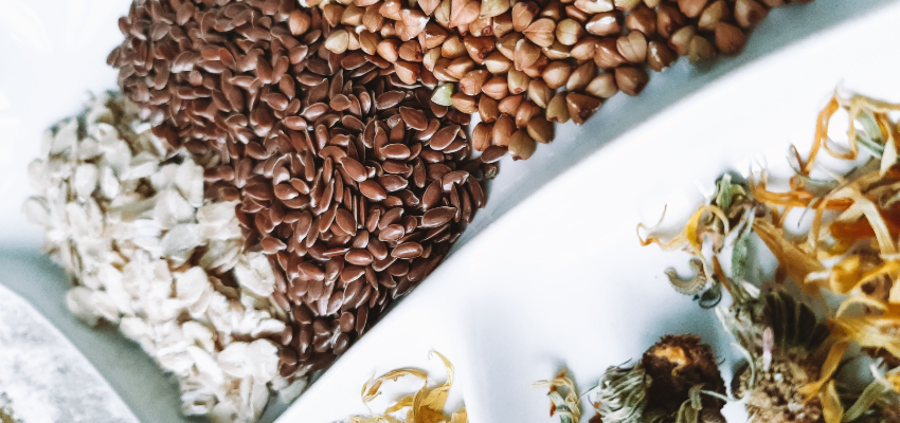
Whole grains: from traditional ingredient to driver of innovation
As nutrient density becomes an increasingly important purchasing criterion, whole grains are gaining renewed relevance.
Whole grains retain all three components of the grain kernel — bran, germ and endosperm — and offer formulation opportunities that can enhance both the nutritional profile and sensory characteristics of bakery products.
Consumer perceptions appear to favour this category of ingredients. According to Ardent Mills research cited by Baking Business, 87% of respondents believe whole grains contribute positively to a product's nutritional profile, 86% consider them healthier ingredients, and 82% appreciate seeing them on ingredient lists.
This goes beyond nutritional communication. Whole and alternative grains can help create products with distinctive sensory identities through recognisable flavours, colours and textures.
According to experts from Ardent Mills and Bay State Milling interviewed by Baking Business, grains such as sorghum and millet offer relatively mild flavours and formulation flexibility, while barley, teff and buckwheat can provide more distinctive textures and flavour profiles.
For bakers and R&D managers, this creates an opportunity to pursue two objectives simultaneously: improving nutritional composition and developing a recognisable product offering.
The technical challenge: more nutrients, the same sensory quality?
Increasing fibre and protein in dough is not simply a matter of replacing one flour with another.
Developing a new formulation requires evaluating how ingredients behave during mixing, proofing and baking. Water absorption, hydration and mixing times are among the variables to consider when introducing whole or alternative grains.
Lauren Lahn, Senior R&D Manager at Ardent Mills, emphasises the importance of defining the desired nutritional profile alongside taste, texture and processing requirements. Grain selection must also take into account storage conditions and the shelf life of the finished product.
The same challenge arises in the development of protein-enriched products.
In October 2026, Puratos introduced its ProteinPro Strength and ProteinPro Flex mixes to the US market, designed for different bakery applications. According to the company, the formulations were developed to incorporate protein and fibre while minimising issues such as dryness, excessive density and undesirable flavours.
Constance Macri, R&D Manager for Bakery Mixes at Puratos USA, also highlighted how adding protein can affect water absorption, dough processability and the quality of the finished product.
This illustrates why nutrient density must also be approached as a food technology challenge.
For professional bakeries, product development can therefore focus on four key areas:
- Nutritional profile: which nutrients to increase and what measurable results to achieve.
- Processability: how hydration, mixing and dough behaviour change.
- Sensory experience: how new ingredients affect volume, softness, aroma and chewiness.
- Shelf-life stability: whether the product maintains its desired characteristics during storage.
These parameters must be assessed through formulation trials rather than assumed to be automatically achieved by introducing ingredients with higher fibre or protein content.
Beyond wholemeal bread: rethinking everyday bakery products
The opportunity is not limited to products traditionally associated with health and wellness, such as wholemeal bread and multigrain products.
Nutrient density also provides an opportunity to rethink everyday products, including bread rolls for foodservice, bagels, breakfast products and baked snacks.
The starting point is to consider the role a product plays in the consumer experience and explore whether its nutritional composition can be improved while preserving its familiar taste and texture.
Commercial applications are already moving in this direction. For example, the ProteinPro mixes introduced by Puratos are designed for bread, rolls, bagels and flatbreads, as reported by Baking Business.
This example demonstrates an expansion of the ingredient solutions available for product formulation, without necessarily providing evidence of increased sales of enriched bakery products.
For industry professionals, the strategic difference lies in viewing fibre and protein not simply as ingredients added to support a nutritional claim, but as components of a broader product development strategy that combines nutrition, technological functionality and eating enjoyment.
Communicating nutritional value without oversimplification
Product innovation also requires more precise communication.
The nutrient density trend identified by Innova Market Insights reflects growing attention to what foods contain and the nutritional value they can provide. For bakery businesses, this makes it increasingly important to communicate nutritional benefits in a clear and credible way.
One possible approach is to develop concrete messages: describing the grains used, explaining the characteristics of the recipe and highlighting fibre content when supported by the product's actual nutritional values.
Regulatory compliance is equally essential. In the European Union, claims such as "source of fibre", "high fibre" and "source of protein" are subject to specific conditions established by Regulation (EC) No 1924/2006.
Innovation must therefore be supported by nutritional assessments and the accurate use of marketing claims.
Bakery's next competitive advantage will lie in formulation
The rise of nutrient density does not mean that every bakery product must become a functional food. Bread, viennoiserie, snacks and sweet baked goods continue to meet consumer needs in which taste and enjoyment remain essential.
Instead, the shift concerns how certain areas of bakery innovation are being developed.
Research from Innova Market Insights and the applications reported by Baking Business indicate that fibre, whole grains and protein quality are relevant areas for new product development. Their potential, however, depends on the ability to incorporate them into recipes that deliver convincing results in terms of both sensory quality and production performance.
For bakers, businesses and foodservice professionals, the strategic question for 2027 will not simply be which ingredient to add.
It will be how to deliver greater nutritional value in every recipe while preserving the qualities that make bakery products appealing.
Sources and further reading
- Baking Business — Jeff Gelski, Innova 2027 trends report leads with nutrient density, 14 October 2026. Report on 2027 food trends and data on fibre, sugar and nutritional information. https://www.bakingbusiness.com/articles/67048-innova-2027-trends-report-leads-with-nutrient-density
- Baking Business — Donna Berry, Versatile whole grains inspire product innovation, 13 October 2026. Ardent Mills research on consumer perceptions of whole grains and insights into their technological and sensory applications.https://www.bakingbusiness.com/articles/67037-versatile-whole-grains-inspire-product-innovation
- Baking Business — Jeff Gelski, New Puratos bread, bun mixes add protein, fiber, 5 October 2026. Launch of ProteinPro mixes and considerations on the processability of protein-enriched doughs.https://www.bakingbusiness.com/articles/66998-new-puratos-bread-bun-mixes-add-protein-fiber
- European Union — Regulation (EC) No 1924/2006 on nutrition and health claims made on foods. Conditions governing the use of nutrition claims.https://eur-lex.europa.eu/legal-content/EN/TXT/?uri=CELEX:32006R1924
PUBLICATION
19/10/2026
Other related news

The future of coffee: trends and innovations for industry operators

SIGEP WORLD brings artisan gelato to the world

05/05/2026
Golden milk: from Ayurvedic remedy to a $1.6 billion global beverage trend

How grocery stores are reshaping Foodservice

Why partnerships between established companies and startups are on the rise?

Tik Tok and the taste revolution: the viral food & beverage trends in 2025

From Starbucks Bear Cup to Labubu: 3 takeaways for foodservice operators

Fragrant Breakfast: the new quiet luxury of Foodservice

Angel Hair Chocolate: the viral sensation redefining chocolate indulgence

The future of Foodservice is hybrid: key insights from the SIGEP Vision Talk 2026

Fine pastry meets luxury: multisensory experiences, hospitality and high-end lifestyle

India food market trends: strategic opportunities for B2B foodservice

Maximizing ROI from Trade Shows: A Buyer’s Guide to Success

Menu Proteinization: How Protein, Fiber and Satiety Are Transforming Bakery, Gelato and Quick Service

New trends in pastry: innovation, exotic flavors, and sustainability

Reimagining ravioli the rise of hybrid dumplings and fusion flavors in bakery and pastry menus